

From Cradle to Corporation: Understanding the Hierarchy of Beliefs
Our beliefs shape how we interpret life. Built from childhood, our Core, Intermediate, and Peripheral Beliefs influence every choice we make. Unlimit One’s methods transform these layers, fostering lasting growth and resilience for a more empowered life.
-
November 6
Imagine three salespersons enters a new job at an IT company. They have never worked in this field before. They are given a product presentation, but doesn’t understand much. What conclusion will the salesperson draw? Or, to put it another way, what belief will he form about IT?
One salesperson will think IT is very complex and therefore exciting and interesting. The other will think IT employs unfriendly arrogant people because they made him look like a fool on purpose. A third will think that IT is boring and only for nerds.
In other words, after gaining same experience, all three salespeople have formed beliefs about the IT industry. But why are they so different?
When we encounter new experiences, we draw conclusions and form new beliefs based on those we already hold.
The Formation of Our Belief System
Starting from infancy, as we gain more and more experience, we are constantly building a complex system of beliefs. And each time we will interpret the experience on the basis of already existing beliefs, and so a new belief will form the next belief This system is hierarchical, each level is built on the basis of the previous one.
The Hierarchical Structure of Beliefs
Our beliefs can be broadly categorized into three groups:
- Core Beliefs
- Intermediate Beliefs
- Peripheral Beliefs
Let’s delve into each of these.
1. Core Beliefs
Definition
Core beliefs are fundamental convictions formed during early childhood. They are deeply embedded, often unconscious, and highly generalized.
Characteristics
- Unconscious and Non-Verbal: We usually aren’t aware of these beliefs, and they can be difficult to articulate.
- Highly Generalized: They form broad perceptions about ourselves and the world.
Examples
- “I am unworthy of love.”
- “The world is a dangerous place.”
- “I am not good enough.”
These beliefs set the foundation for how we perceive experiences and interact with others.
2. Intermediate Beliefs
Definition
Intermediate beliefs are more specific than core beliefs and often serve as strategies to navigate the world in alignment with our core beliefs.
Characteristics
- Slightly More Specific: They provide guidelines for behavior.
- Coping Mechanisms: They help us function in ways that confirm our core beliefs.
Examples
- “I must always please others to be accepted.”
- “I should avoid taking risks to stay safe.”
These beliefs influence our habits and decision-making processes.
3. Peripheral Beliefs
Definition
Peripheral beliefs are specific, conscious, and easily changeable. They directly influence our daily actions and reactions.
Characteristics
- Highly Specific: They apply to particular situations.
- Easily Articulated: We are usually aware of these beliefs.
Examples
- “I should never argue with my boss.”
- “It’s important to follow societal norms strictly.”
These beliefs are the most accessible for introspection and change.
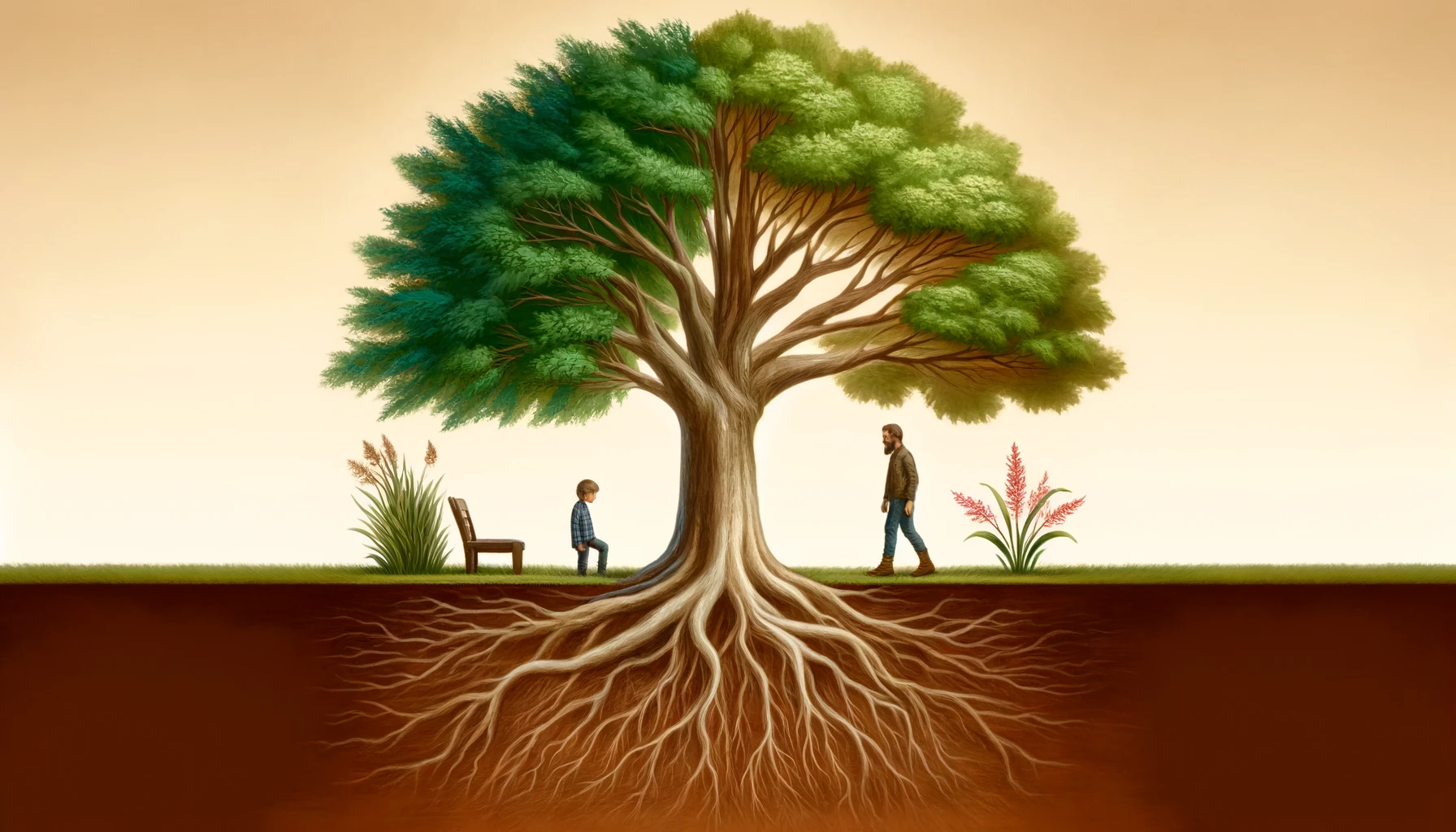
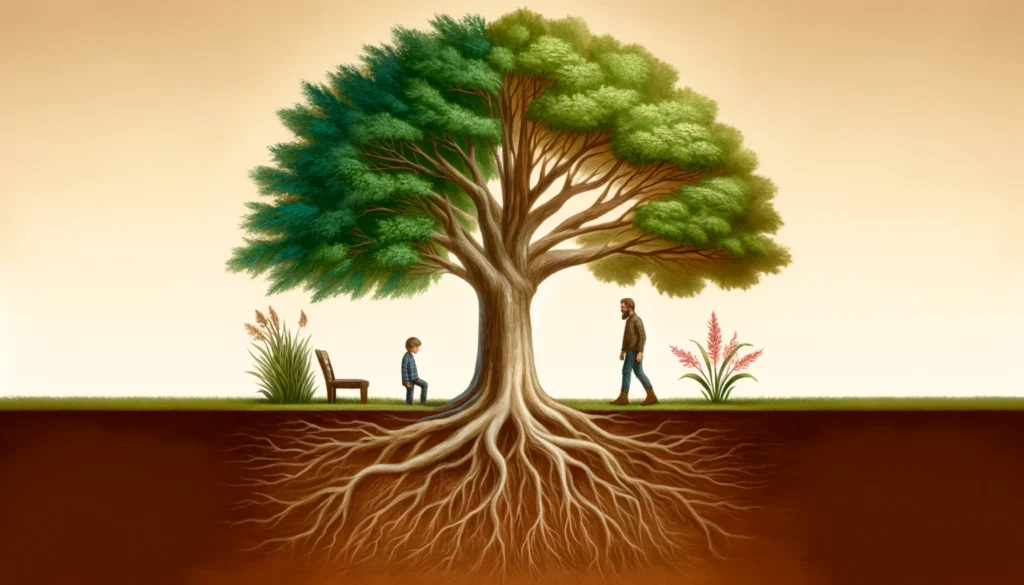
The Tree of Beliefs
Visualize the hierarchy of beliefs as a tree:
- Roots (Core Beliefs): The foundational beliefs formed in early childhood.
- Trunk and Branches (Intermediate Beliefs): Strategies and rules developed to support the core beliefs.
- Leaves (Peripheral Beliefs): Specific attitudes and behaviors that stem from the intermediate beliefs.
A single core belief can give rise to numerous intermediate beliefs, which in turn generate a multitude of peripheral beliefs.
The Impact on Adult Life
Even as adults facing complex issues—such as business decision-making, procrastination, burnout, or relationship problems—our responses are often rooted in these early-formed beliefs. To enact meaningful and lasting change, we need to address the foundational core beliefs that influence our thoughts and behaviors.
Accessing and Transforming Core Beliefs
You might think, “But I’m not even aware of my core beliefs. How can I change something I can’t identify?” Since core beliefs are often unconscious and formed so long ago, they can be elusive.
At Unlimit One, we use methods by which you can transform your Core Beliefs without even realising it. You’ll take something that is conscious (like anxiety before a meeting) and move through a process of transformational methods to change the entire chain of beliefs, from the most superficial to the deepest.
Conclusion
Understanding the hierarchical structure of our belief system explains why we interpret experiences differently and why early-formed beliefs have such a profound impact on our adult lives. By consciously addressing and reshaping our core beliefs, we unlock the potential for significant personal growth and improved well-being.
-
 Is It Worth Hating Yourself?
-
December 23
-
-
 How do limiting beliefs hinder your career?
-
November 8
-